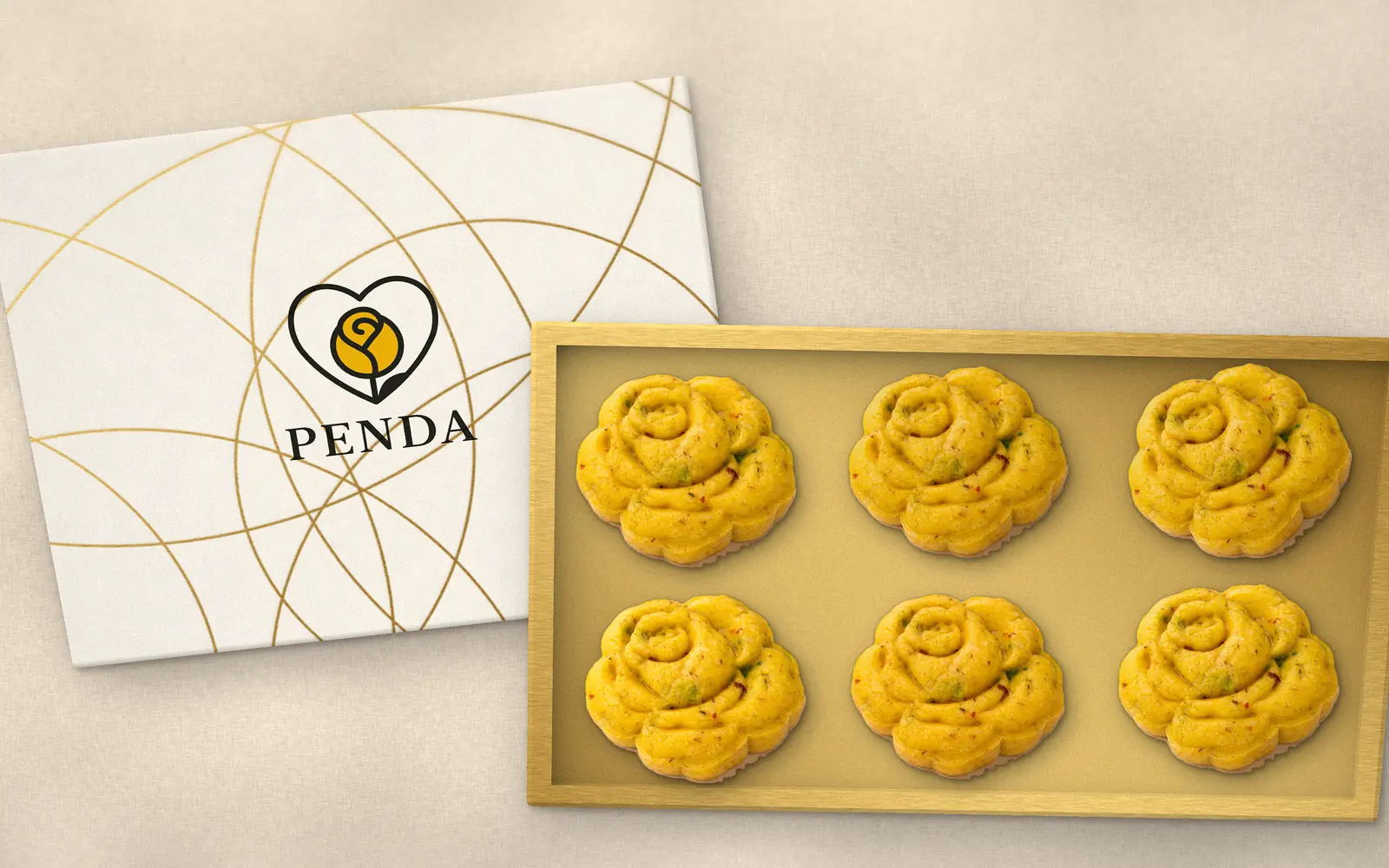
Peda (pronounced pay-dah) is a soft, rich sweet made from milk that has been slowly reduced and cooked with sugar until it can be shaped by hand. It is among the most loved sweets in India, offered at temples, shared at weddings and births, and carried home in boxes at every festival of the year.
A sweet with a long history
Peda is most often associated with Mathura in northern India, where it has been made for generations and is still offered in devotion. Other towns have their own celebrated versions, from the caramelised, sugar-dusted peda of Dharwad in Karnataka to the pale, cardamom-scented pedas of Gujarat. Each region guards its own method, but the idea is always the same: milk, patience and heat, turned into something worth giving.
Kesar peda
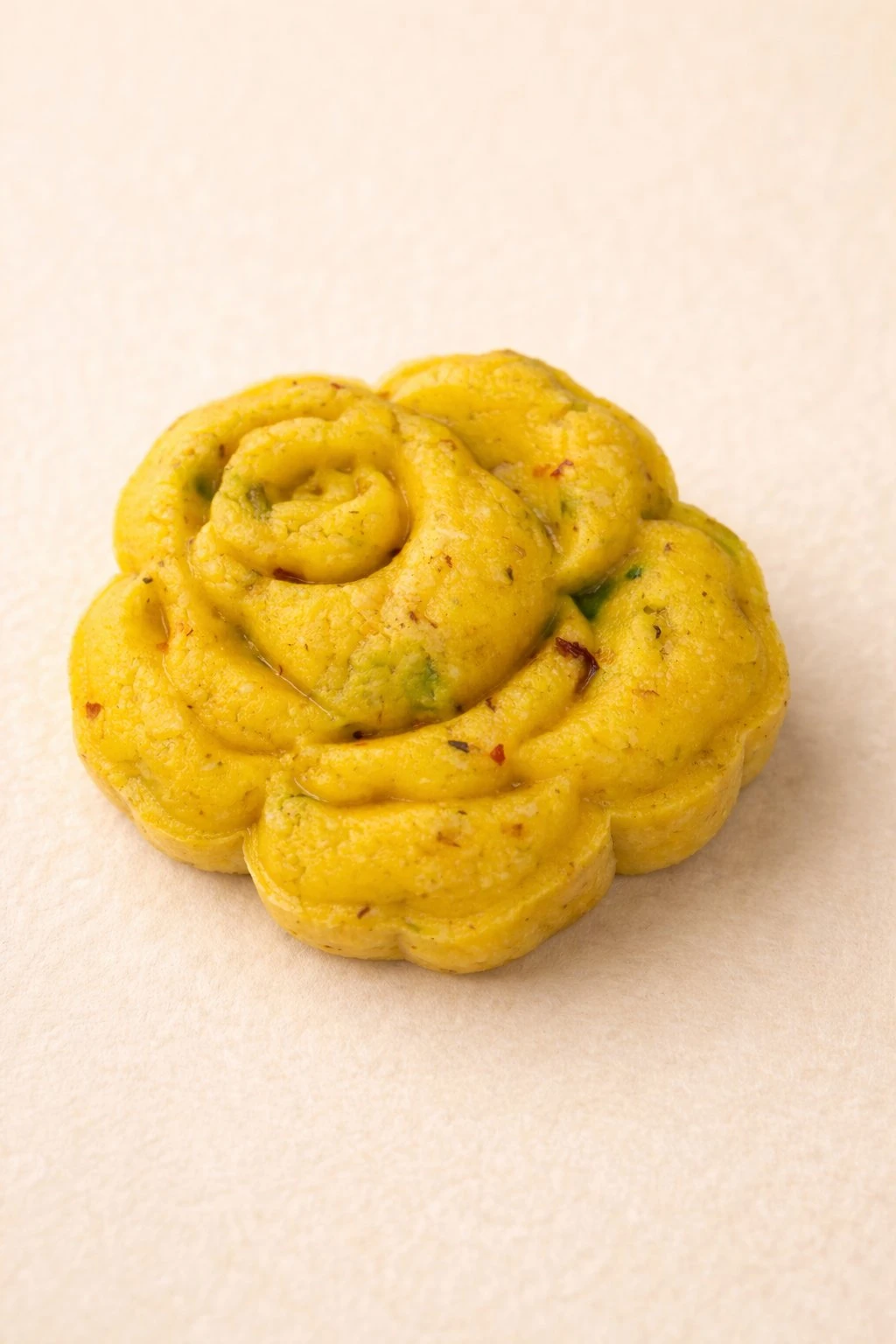
Kesar is the Hindi word for saffron. Kesar peda is peda perfumed and coloured with saffron threads, which give it a soft golden hue and a warm, honeyed fragrance. Saffron is among the most precious spices in the world, picked by hand from the crocus flower, so a kesar peda has always been a sweet for occasions.
“Milk, patience and heat, turned into something worth giving.”
How we make Penda
Our family’s story with milk sweets began in Mombasa in 1942, and Penda is our own take on the kesar peda we grew up with. We infuse gold top jersey milk, the richest milk available, with Spanish saffron, and build it with condensed milk and milk powder, Iranian pistachios, Californian almonds, cardamom and nutmeg.
Each sweet is pressed by hand into the shape of a rose, in small batches, and only ever to order. Penda are vegetarian, and contain milk and nuts.
How to enjoy it
Peda is best at room temperature, when its texture is at its softest and the saffron most fragrant. Serve it after a meal with a cup of chai or black coffee, or set a plate out for guests. It is rich, so one is often enough, though we have never known anyone stop at one.